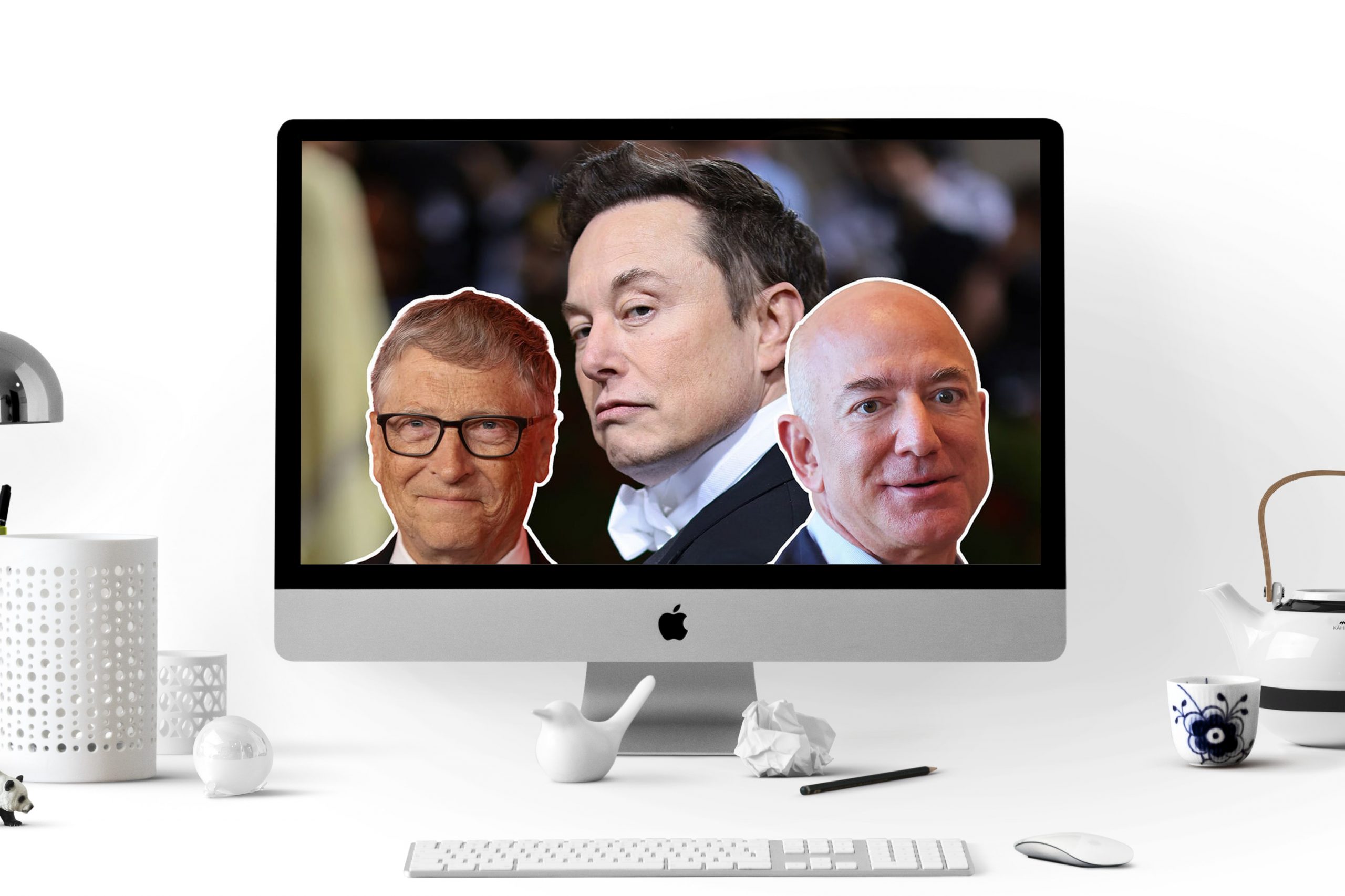
Top 10 Businessmen in the World: 2026 Rankings and Net Worth
The global billionaire landscape has shifted dramatically since 2022. Markets moved, empires expanded, a few stumbled — and the AI revolution reshuffled fortunes faster than any previous technological wave. Forbes and Bloomberg’s real-time trackers now update valuations continuously, reflecting just how volatile the top of the wealth pyramid has become.
One thing hasn’t changed: the wealthiest people on earth built systems, not just businesses. They leveraged technology, capital allocation, and relentless market positioning to compound wealth at a scale most can’t comprehend. Understanding how the top 10 businessmen in the world operate is genuinely useful — whether you’re building a startup, scaling a B2B company, or positioning yourself as a market leader.
Key Takeaways
- AI and energy infrastructure dominate the 2026 wealth rankings — the biggest fortunes are now tied to compute power, clean energy, and data.
- Net worth is market-driven — a significant portion of every billionaire’s wealth sits in publicly traded equities, making rankings volatile month to month.
- Indian billionaires are climbing the global list faster than any other nationality, reflecting India’s accelerating economic growth.
- Diversification is the strategy — every tycoon on this list controls multiple verticals, reducing single-point-of-failure risk.
- Personal brand equity matters — names like Musk and Ambani are themselves billion-dollar assets, driving stock movements, investor confidence, and public narrative.
If you’re a founder or executive thinking about how to build authority and revenue at scale, your personal brand is your most underutilised growth asset. Let’s get into the list.
The World’s Top 10 Businessmen and Tycoons in 2026
1. Elon Musk — Estimated Net Worth: ₹35–37 Lakh Crore ($420–450 Billion)
Musk remains the undisputed wealthiest person on the planet in 2026. His valuation fluctuates depending on Tesla’s stock performance and the private valuations of SpaceX and xAI, his artificial intelligence company launched in 2023. xAI’s Grok model has become a serious competitor in the enterprise AI space, adding a new dimension to his already staggering portfolio.
Tesla has expanded aggressively into autonomous robotaxi services. SpaceX continues to dominate commercial space launch contracts. X (formerly Twitter) remains a controversial but strategically important platform for information and commerce. Musk is a masterclass in multi-vertical empire building — and a reminder that controlling narrative and distribution is just as valuable as controlling product.
His approach to brand-driven influence is worth studying for any founder. See how the world’s most influential business figures use communication as a strategic weapon.
2. Jeff Bezos — Estimated Net Worth: ₹18–19 Lakh Crore ($200–220 Billion)
Bezos has climbed back up the rankings. Amazon’s AWS division remains the backbone of global cloud infrastructure, and its aggressive push into AI-powered logistics and healthcare has reignited growth. His personal investments through Bezos Expeditions span climate tech, longevity research, and media.
Blue Origin has resumed competitive pressure on SpaceX with lunar contracts. The divorce-driven equity transfer to MacKenzie Scott in 2019 cost him dearly in rankings terms — but Amazon’s compounding growth has more than recovered that ground. Bezos built the world’s most efficient distribution machine and then pivoted it to power the world’s AI infrastructure.
3. Mark Zuckerberg — Estimated Net Worth: ₹16–17 Lakh Crore ($190–210 Billion)
Meta’s dramatic turnaround from 2023 onwards has been one of the most significant corporate pivots in recent memory. After the metaverse bet drew widespread ridicule and billions in losses, Zuckerberg refocused Meta on AI — launching the open-source Llama model series and building AI assistants across WhatsApp, Instagram, and Facebook.
Meta’s AI-driven ad targeting is now the most aggressive monetisation engine on any social platform. Revenue growth returned sharply. Zuckerberg’s willingness to absorb short-term reputational pain for long-term strategic position is a lesson every founder should study. To understand how AI is reshaping marketing platforms like Meta, read 10 mind-blowing ways AI is changing the marketing industry.
4. Larry Ellison — Estimated Net Worth: ₹14–16 Lakh Crore ($175–195 Billion)
Oracle’s transformation into a cloud and AI infrastructure company has dramatically increased Ellison’s wealth. Oracle’s cloud infrastructure division is growing at rates that rival AWS and Azure in specific enterprise verticals. His early investment in AI-focused database architecture is paying off as enterprises scramble to build AI-ready data infrastructure.
At over 80 years old, Ellison remains one of the most active and strategically sharp operators in global technology. His approach to automating enterprise operations through integrated data platforms is shaping how entire industries function. If you’re exploring marketing automation for your business, Ellison’s Oracle playbook offers a masterclass in system-level thinking.
5. Jensen Huang — Estimated Net Worth: ₹13–15 Lakh Crore ($160–180 Billion)
The biggest wealth creation story of the mid-2020s belongs to Jensen Huang, co-founder and CEO of NVIDIA. The AI infrastructure boom — driven by demand for GPU compute to train and run large language models — turned NVIDIA into one of the most valuable companies in human history, briefly surpassing $3 trillion in market capitalisation.
Huang’s disciplined long-term bet on parallel computing, made decades before the AI wave arrived, is a textbook case in patient, vision-led strategy. He entered the top five global billionaires for the first time in 2024 and has stayed there. For a deeper dive into the AI tools reshaping business, see 14 AI tools for marketers beyond ChatGPT.
6. Bernard Arnault and Family — Estimated Net Worth: ₹13–14 Lakh Crore ($155–170 Billion)
The chairman and CEO of LVMH, the world’s largest luxury conglomerate, Arnault controls more than 75 premium brands including Louis Vuitton, Dior, Sephora, Moët Hennessy, and Tiffany & Co. Luxury goods proved resilient through economic headwinds, particularly driven by ultra-high-net-worth consumers in Asia and the Middle East.
LVMH’s entry into luxury hospitality and experiential retail has opened new revenue streams. Arnault’s position is a reminder that brand equity compounds like financial equity — and that pricing power is the ultimate business moat. Building that kind of brand authority starts with a deliberate strategy, whether you’re a global conglomerate or an individual founder.
7. Mukesh Ambani — Estimated Net Worth: ₹9.5–11 Lakh Crore ($115–130 Billion)
India’s richest man and Asia’s most influential business figure, Mukesh Ambani’s Reliance Industries spans telecom (Jio), retail (JioMart and Reliance Retail), green energy, and entertainment. Jio’s 5G rollout across India has created one of the world’s largest high-speed mobile user bases.
Reliance’s renewable energy gigafactory projects in Gujarat position Ambani at the centre of India’s energy transition. For any business operating in the Indian market, Ambani’s moves are essential strategic intelligence. If you’re building a go-to-market strategy for India, understanding market infrastructure at this scale changes how you position and distribute. Also see the top 10 richest men in India for context on India’s billionaire ecosystem.
8. Gautam Adani — Estimated Net Worth: ₹7–8.5 Lakh Crore ($85–100 Billion)
Adani’s journey from 2022’s peak valuation through the Hindenburg Research short-seller attack in early 2023 and back into the global top ten is a story of resilience and institutional backing. The Adani Group continues to dominate Indian port operations, airports, power generation, and green energy infrastructure.
Government infrastructure spending in India has been a structural tailwind. Adani now controls one of the most strategically significant logistics and energy networks on the planet, making him an inescapable counterpart to any large-scale operation in South Asia. His recovery is a case study in reputation management under fire — a lesson relevant to every business leader.
9. Steve Ballmer — Estimated Net Worth: ₹7–8 Lakh Crore ($85–95 Billion)
Often overlooked in billionaire conversations, Ballmer’s wealth stems primarily from his massive Microsoft stake, accumulated during his tenure as CEO from 2000 to 2014. Microsoft’s dominance in enterprise software, cloud (Azure), and its strategic investment in OpenAI have driven its valuation to new peaks under Satya Nadella’s leadership.
Ballmer benefits from Microsoft’s AI integration across Teams, Copilot, and Azure without having to manage the operational complexity. His story is a reminder that equity in the right system, held long enough, is its own compounding strategy. He also owns the Los Angeles Clippers NBA franchise, diversifying beyond tech.
10. Warren Buffett — Estimated Net Worth: ₹6.5–7.5 Lakh Crore ($80–90 Billion)
The Oracle of Omaha remains the world’s most studied investor at 95 years old. Berkshire Hathaway’s portfolio spans insurance, energy, consumer brands, and a massive Apple stake that has been the single largest driver of Berkshire’s recent gains. Buffett’s disciplined value investing philosophy — buy great businesses at fair prices and hold them — has compounded wealth across seven decades.
His 2024 decision to step back from operational leadership, with Greg Abel set to succeed him, marked a generational transition at one of the world’s most admired companies. Buffett’s annual shareholder letters remain required reading for anyone serious about business and capital allocation. For aspiring business leaders, the top books on financial independence carry many of these principles in actionable form.
What These Tycoons Have in Common: Strategic Lessons for Founders
Studying the top 10 businessmen in the world isn’t an exercise in admiration — it’s a strategic intelligence exercise. Several patterns emerge consistently across this list that are directly applicable to startup founders, B2B executives, and anyone building at scale.
- They build infrastructure, not just products. AWS, Jio, NVIDIA’s GPU stack, Oracle’s cloud — these are platforms others build on. Infrastructure-level thinking creates defensible, compounding businesses.
- They own their narrative. Musk’s X, Zuckerberg’s Meta communications, Ambani’s PR machine — every name on this list treats information and public perception as a strategic asset. Your personal brand is infrastructure too.
- They diversify across verticals. Not one of these tycoons depends on a single revenue stream. Multi-vertical positioning reduces fragility and creates cross-subsidy opportunities.
- They move early on technology waves. Huang bet on parallel computing in 2006. Bezos bet on cloud in 2006. Zuckerberg pivoted to AI in 2023. Timing technology adoption is a core CEO skill.
- They think in decades, not quarters. Every business decision on this list has a 10-year horizon embedded in it. Short-termism is the enemy of compounding.
If you’re building a business in India and want to apply these principles to your go-to-market strategy, explore futuristic business ideas that can make you a multi-millionaire and the most profitable businesses to build right now.
Frequently Asked Questions
Who is the richest businessman in the world in 2026?
Elon Musk is the richest businessman in the world in 2026, with an estimated net worth of $420–450 billion (approximately ₹35–37 lakh crore). His wealth is primarily tied to his stakes in Tesla, SpaceX, xAI, and X (formerly Twitter). Rankings fluctuate frequently based on stock market movements and private company valuations.
Which Indian businessman ranks highest on the global billionaire list in 2026?
Mukesh Ambani ranks highest among Indian businessmen globally in 2026, with an estimated net worth of $115–130 billion (approximately ₹9.5–11 lakh crore). He is ranked 6th globally, driven by Reliance Industries’ dominance in telecom, retail, and green energy. Gautam Adani follows at 7th globally. India now has more top-20 global billionaires than any previous period in its history.
What business strategies made these tycoons the wealthiest people on earth?
The common strategies across the world’s top 10 businessmen include: building platform-level infrastructure that others depend on, diversifying across multiple high-growth verticals, investing early in transformative technology (AI, cloud, clean energy), cultivating a powerful personal brand that moves markets, and thinking in decade-long timescales rather than quarterly cycles. These are not accidental outcomes — they are repeatable strategic frameworks applicable at any scale.
Build the Authority and Revenue Systems That Scale
Every billionaire on this list built systems that generate wealth without requiring their constant presence. The same principle applies whether you’re running a ₹5 crore startup or a ₹500 crore enterprise. The difference between businesses that plateau and businesses that compound is almost always strategy, positioning, and execution infrastructure.
If you’re ready to build that kind of authority and revenue engine — with a Fractional CMO who understands both global strategy and the Indian market — let’s talk about what’s possible for your business.
